
Review
This slim book, a meticulously selected distillation from Jung’s broader text on Kundalini Yoga, offers a fascinating, if occasionally fragmentary, insight into the convergence of Jungian psychology and Eastern spiritual traditions. The 1999 Princeton University Press edition — from their indispensable Jung Extracts series — presents a highly edited excerpt which avoids the sprawling bulk of Jung’s collected works, making this difficult material more accessible to a general reader. It still gives profound insights into Jung’s emerging vision of the psyche’s process of Kundalini awakening.
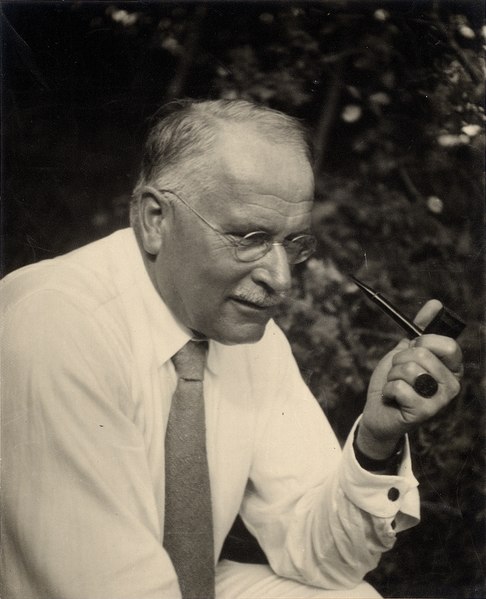 Swiss psychiatrist and psychoanalyst Carl Gustav Jung (1875-1961) is arguably the most important figure in the history of psychology. His pioneering research into the collective unconscious, archetypes, and individuation influenced not only psychological theory and practice but also strayed beyond the purely clinical into philosophical and spiritual territory. His obsession with Eastern thought, featured in this book, demonstrates his broad intellectual range and reluctance to back away from apparently irreconcilable bodies of knowledge.
Sonu Shamdasani, the editor of this volume, is a distinguished scholar of Jung’s life and work. His expertise is crucial in unpacking Jung’s often allusive style and providing necessary context. These brief editorial comments are essential for providing some sense of the intellectual history of the included texts and illuminating Jung’s evolution of thought on the subject.
The book isn’t that much of a story in the classical sense. Instead, it offers a curated collection of lectures, letters, and seminar extracts, distributed throughout the psychological expressions of Kundalini Yoga. Jung’s approach is not reductive; instead, it is a wary exploration of the possible psychological dangers and transformative promise of this potent energy. As his texts demonstrate, he was well aware of the psychological rollercoasters that Kundalini awakening can trigger, often emphasizing that it requires careful support and integration within a broader therapeutic context.
The excerpts reveal Jung’s astute sensitivity to the symbolic language of the Kundalini experience. He doesn’t approach the phenomenon from a Western psychological perspective. Instead, he juxtaposes the mystical symbolism of Kundalini with the archetypal imagery emerging in the individuation process. This blending of Eastern spirituality and Western psychology is both fascinating and illuminating, allowing us to appreciate more fully what is universal about psychological transformation.
The book’s fragmentary nature is restrictive. This lack of a high-level storyline leaves the reader somewhat untethered at moments. The shortness of the extracts can occasionally be at the cost of explanatory profundity. Absent here are Jung’s comprehensive reflections on this matter, which you’ll need to continue reading to discover.
The Psychology of Kundalini Yoga is for anyone interested in Jungian psychology, eastern spirituality, and the psychodynamics of spiritual awakening. It’s at once a testament to the enduring quality of Jung’s work and a welcome contribution to the ongoing dialogue between East and West. The carefully revised prose still flows and conveys its meaning. It’s an excellent gift for any Jungian or spiritually minded reader’s shelves. It deftly navigates the subtle intricacies of a profound topic, leaving the reader with an increased appreciation for the psychological and spiritual depth of Kundalini Yoga.