Samkhya, one of the oldest and most influential schools of Hindu philosophy, is renowned for its systematic approach to comprehending reality. Derived from the Sanskrit root samkhya, "number" or "enumeration," the philosophy is a sort of enumeration of the elements of existence. Samkhya provides a framework for explaining the universe, the self, and liberation by distinguishing between two fundamental realities: Purusha (consciousness) and Prakriti (matter).
The Historical Background of Samkhya
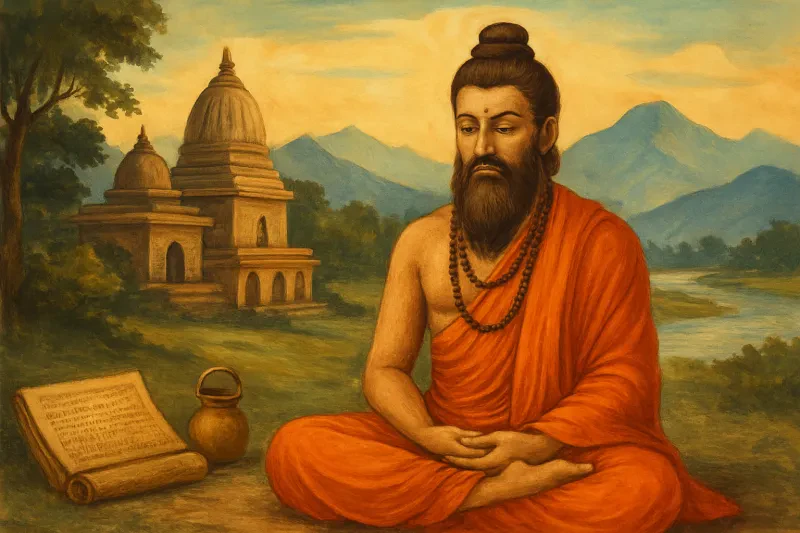
According to tradition, Samkhya goes back to the sage Kapila, who is believed to have authored the original Samkhya Sutras. Its ideas and language have shaped other prominent schools of Hindu philosophy, such as Yoga and Vedanta, and have found their way into epic poems like the Mahabharata and the Bhagavad Gita. Samkhya developed over centuries from oral transmission to written treatises and came to define the Indian philosophical milieu.
Dualism: Purusha and Prakriti
The most characteristic feature of Samkhya is its dualistic ontology. Samkhya states that the universe is made up of two realities, both of which are eternal and independent principles:
Purusha: The pure consciousness, observer, or spiritual essence. Purusha is inactive, shapeless, and immutable. It is the real ego, unswollen by the flesh.
Prakriti: The primal matter or nature. Prakriti is energy, force, the origin of all matter. It brings forth the ten thousand things through its movements.
All experiences, transformations, and occurrences arise from the interplay of Purusha and Prakriti. Liberation (moksha) occurs when we recognize the distinction between these two and identify with pure consciousness rather than the shifting material world.
The 25 Tattvas: Listing of existence
Samkhya philosophy breaks existence down into 25 fundamental principles, or tattvas. These include:
Purusha (consciousness)
Prakriti (matter)
Three Gunas (qualities of Prakriti): Sattva (balance), Rajas (activity), and Tamas (inertia)
Buddhi (intellect)
Ahamkara (ego or sense of individuality)
Manas (mind)
Five Jnanendriyas (sense organs): hearing, touch, sight, taste, smell
Five Karmendriyas (organs of action): speech, hands, feet, excretion, reproduction
Five Tanmatras (subtle elements): sound, touch, form, taste, smell
Five Mahabhutas (gross elements): earth, water, fire, air, ether
This list is the foundation of Samkhya's account of the physical and psychological world.
The Three Gunas: Nature's Qualities
Prakriti has three gunas, which mix in different proportions to generate diversity in the cosmos:
Sattva: Associated with purity, knowledge, and balance.
Rajas: Activity, dynamism, and change.
Tamas: represents obscurity, laziness, and stupidity.
Every being and every object possesses these gunas in varying degrees, which affect their conduct, experience, and growth.
Samkhya and Human Experience
Samkhya provides a prescient model of mind and experience. It depicts the mind as a delicate tool formed by intellect (buddhi), ego (ahamkara), and mind (manas), which collaboratively digest sensory input and impel action. By analyzing the interactions among these elements and the gunas, Samkhya aims to clarify why humans suffer, yearn, and become lost—and how they can find peace and freedom.
Liberation (Moksha) in Samkhya
The ultimate aim in Samkhya is liberation, or moksha. This is not through rites or devotion, but through discriminative knowledge (viveka), which makes you realize the separateness of Purusha from Prakriti. When the self identifies with pure consciousness rather than the physical body and mind, pain ceases, and salvation emerges.
Relationship with Other Hindu Philosophies
Samkhya left a deep mark on other Hindu systems, in particular Yoga. Yoga philosophy, according to Patanjali, draws on Samkhya's metaphysics, focusing on the distinction between Purusha and Prakriti as the path to liberation. Vedanta, given its disparate take on reality, is equally deeply conversant with Samkhya. Even Buddhist and Jain philosophy betray a hint of Samkhya analysis.
Modern Relevance of Samkhya
But today, Samkhya is still seen as a philosophy of analytical inquiry and self-reflection. Its insights into the nature of consciousness, mind, and matter continue to inspire academics, spiritual aspirants, and yogis and meditators worldwide. By applying its principles, you too can find a path to wisdom and fulfillment.
Conclusion
Samkhya is a foundational school of Hindu philosophy that presents a rational and systematic perspective on reality. By separating consciousness from the material and enumerating the components of reality, Samkhya lays out a lucid path to self-knowledge that brings freedom. Whether as an academic pursuit or a philosophy of self-development, Samkhya is a timeless font of insight for any seeker wishing to delve into the depths of human experience and the enigma of reality.

Jnana Yoga: The Yoga of Knowledge
by Swami Vivekananda
Product information
$5.14
Product Review Score
4.38 out of 5 stars
148 reviews